

Many growers still rely on "gut feeling" when adjusting supplemental grow lights—hanging them higher, turning up the brightness, or extending the operating hours. The results are often suboptimal: seedlings become leggy and weak or suffer leaf burn, while flowering and fruit set are poor, leading to low yields.
People often confuse wattage with lumens, but the two core metrics that truly determine photosynthetic efficiency in vegetables are PPFD (Photosynthetic Photon Flux Density) and DLI (Daily Light Integral).
PPFD: The intensity of photons striking the plant canopy per unit of time (measured in µmol/m²/s); it represents instantaneous light intensity.
DLI: The total amount of photosynthetically active photons received over a 24-hour period (measured in mol/m²/day); it represents the "total light dosage" a plant receives in a day.
Calculation formula: DLI = PPFD × hours of light × 3600 ÷ 1,000,000
Key insight: For the same DLI, you can use a lower PPFD for a longer duration or a higher PPFD for a shorter duration. Plants prioritize the total daily light dosage over the mere brightness of the light.
Data is based on research from Dutch greenhouses and controlled-environment agriculture studies at Cornell University and Virginia Tech; applicable to indoor hydroponics, vertical farms, and greenhouse supplemental lighting scenarios.
| Crop Type | Growth Stage | PPFD (μmol/m²/s) | Target DLI (mol/m²/day) | Recommended Photoperiod | Notes |
| Leafy greens (lettuce, bok choy, spinach) | Seedling stage | 100-250 | 6-12 | 16-18 h | Avoid strong light that scorches seedlings; prevents leggy growth. |
| Vegetative growth | 250-400 | 12-17 | 16-18 h | Leafy greens complete their full growth cycle; DLI exceeding 20 can easily cause leaf tip burn. | |
| Fruiting vegetables (tomato, pepper, eggplant) | Seedling stage | 150-300 | 10-14 | 16-18 h | Seedlings are delicate; excessively high PPFD causes leaf bleaching and growth arrest. |
| Vegetative growth | 350-600 | 17-22 | 14-16 h | Build the plant framework; cultivate sturdy stems and leaves. | |
| Flowering & fruiting stage | 500-800 | 20-30 | 12-14 h | High DLI improves fruit set rate, fruit sugar content (Brix), and individual fruit weight; under CO₂ enrichment, PPFD can be further increased. | |
| Herbs (basil, cilantro, mint) | Seedling stage | 100-250 | 7-12 | 16-18 h | |
| Harvestable growth stage | 250-450 | 15-20 | 14-16 h | Insufficient DLI leads to weakened aroma and rapid bolting/flowering. |
1. Maximizing PPFD for seedlings: Seedling leaves have thin waxy cuticles; intense light causes photo-burn (whitening and scorching), while insufficient light leads to severe leggy growth and stem collapse.
2. Focusing solely on wattage while ignoring canopy PPFD: Wattage does not equal the photons actually reaching the leaf surface; lights with different optical designs can yield vastly different PPFD levels despite having the same power rating.
3. DLI mismatching the growth stage: For fruiting crops, a DLI below 18 mol/m²/day during the fruiting stage often leads to flower and fruit drop, significantly reducing yield.
4. Blindly extending light duration: Plants require a dark period for respiratory metabolism; excessive light disrupts physiological cycles and can actually inhibit growth.
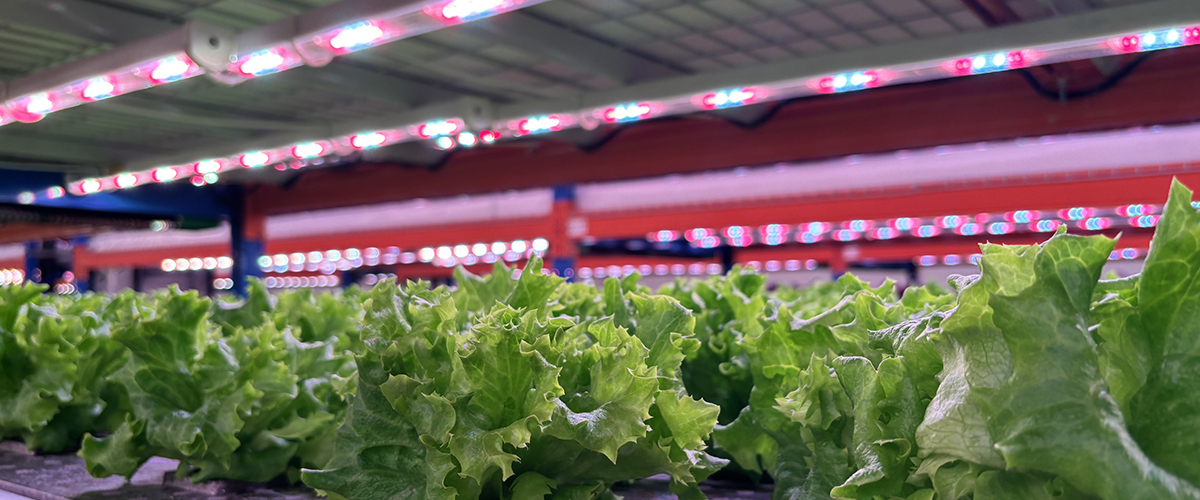
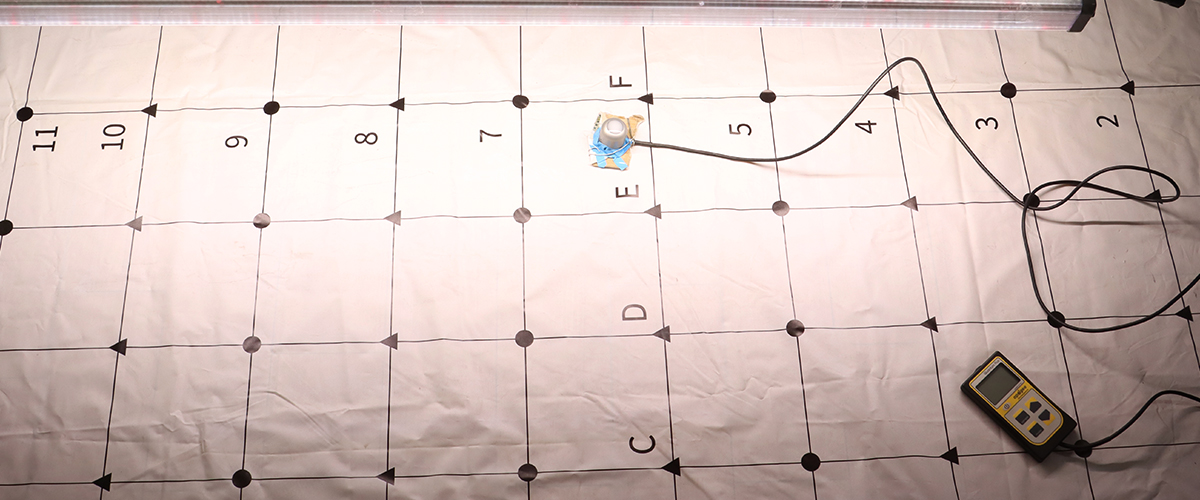
1. Measure canopy PPFD: Use a PAR meter to measure at the plant canopy level, not at the light fixture surface.
2. Adjust dynamically based on growth stage: Use low intensity for seedlings, gradually increase it during the vegetative stage, and provide peak intensity during the flowering and fruiting stages.
3. Flexibly balance PPFD and photoperiod: If the light's PPFD is limited, extend the lighting duration to ensure the target DLI is met; if the PPFD is high, shorten the duration to avoid light stress.
4. Coordinate with the environment: High PPFD requires good ventilation and appropriate CO₂ levels; otherwise, intense light causes heat stress, severely compromising yields.
Many growers find that even with high-wattage lights, vegetable growth remains suboptimal. The root cause is a failure to match PPFD and DLI to the crop's specific growth stage; simply increasing power wastes electricity and can damage the crops.
▲ Traditional lighting adjustments based on experience are heavily influenced by subjective judgment, whereas PPFD and DLI serve as standardized, quantitative metrics for controlled-environment agriculture.
▲ Greenhouses and vertical farms can use these parameters to precisely configure supplemental lighting plans, ensuring stable yields and consistent quality.
This reduces inefficient energy consumption and prevents electricity waste caused by excessive lighting. Avoid issues caused by excessive light, such as light burn, leggy growth, flower drop, and degraded flavor.
When selecting supplemental grow lights, do not focus solely on wattage; prioritize the actual measured PPFD at the canopy level and the availability of dimming functions. LED lights with adjustable dimming levels are a practical choice for indoor growing and greenhouse supplementation, as they accommodate the entire vegetable lifecycle—from seedling to harvest—allowing for dynamic output adjustments based on the reference chart.
Stop adjusting light levels based merely on visual estimation. PPFD determines instantaneous light intensity, while DLI determines the total daily light dosage; the correct approach to vegetable lighting supplementation relies on a combination of both. Save the chart above and adjust the light's PPFD and duration according to the specific vegetable variety and growth stage; doing so will significantly improve plant vigor, yield, and quality.
For greenhouse or vertical farming projects, you must also factor in local natural light, calculate the combined DLI (natural light plus artificial supplementation), and formulate a comprehensive lighting strategy.
Luxgrow is developed by photology engineers and more than 13 years R & D engineers team in led lights
As a professional and rich experience grow light designer and manufacturer for indoor greenhouse farms ; Luxgrow really knows offer the exclusive customized layout service is very necessary and cost-efficient.
We offer free exclusive customized layout service for customers , not only in the lighting configuration help,but also help you know the budget
 Whatsapp
 Company Profile
 Made in cambodia
 Development
 Research and development
 Production capacity
 Plants Grow Lights
 Agriculture Supplemental Lights
 Medical cannabis cultivation
 Agricultural planting