

Greenhouses rely on a combination of natural light and supplemental lighting, whereas indoor facilities (closed-loop plant factories) depend entirely on grow lights with no natural light. Neither method is inherently superior; the choice depends on your scale of production, budget, and climatic conditions.
For commercial strawberry cultivation aiming for stable yields, early maturity, high sugar content, and minimal fruit deformity, lighting is the decisive factor. Growers often face a dilemma when upgrading equipment: is it better to use supplemental lighting in greenhouses or fully artificial lighting in indoor multi-layer plant factories?
Neither model is strictly better or worse; the key difference lies in their approach: greenhouses rely primarily on natural light with artificial lighting as a supplement, while indoor plant factories create a complete light environment using specialized grow lights. In multi-layer vertical farming scenarios, in particular, lighting uniformity, spectral controllability, and light intensity stability directly determine strawberry yield and quality. This article analyzes the pros and cons, suitable applications, and selection criteria for both models—referencing the Luxgrow LPVR series of high-end commercial lighting solutions—to help commercial growers avoid common pitfalls.
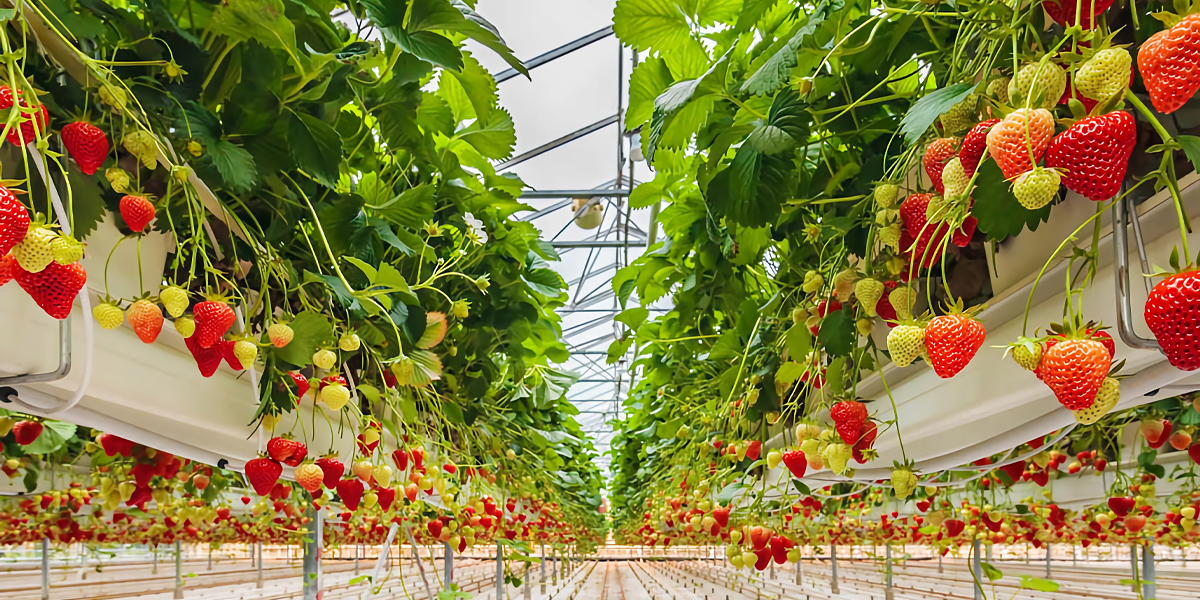
Greenhouse cultivation is currently the mainstream method for commercial strawberry production. The core logic is to utilize free natural light, with grow lights serving only to supplement periods of insufficient light. This model is highly cost-effective and suitable for single- or double-layer ground cultivation as well as elevated bench systems.
1. Lower Costs and Superior Flavor
Natural light contains a full spectrum—including UV and far-red light—that effectively promotes flower bud differentiation and enhances fruit coloration and sweetness. The resulting strawberries boast rich aroma and higher sugar content—advantages that are difficult to replicate with purely artificial lighting. Grow lights are used only during short winter days or periods of overcast, rainy, or hazy weather rather than running continuously; this significantly reduces electricity costs and equipment wear, easing operational pressure. Additionally, greenhouses allow for natural ventilation and optimal day-night temperature differentials. When combined with natural pollination by bees, this setup drastically reduces issues like deformed or hollow fruit, resulting in a higher percentage of marketable produce.
2. Suitable for traditional large-scale cultivation with a low barrier to entry
There is no need to retrofit the facility into a sealed environment or install comprehensive climate control and ventilation systems. Simply adding supplemental lighting as needed addresses common issues such as reduced winter yields, slow maturation, and uneven coloration. This allows for a quick extension of the growing cycle and earlier market entry to capture premium pricing.
Production is entirely constrained by seasons, weather, and geographic location, making stable year-round output impossible. Uneven light distribution—including edge "dead zones" and shading issues—often leads to inconsistent plant growth. Additionally, the high-humidity, dusty greenhouse environment places rigorous demands on the waterproofing and moisture resistance of lighting fixtures.
Greenhouse lighting focuses on "supplementation." There is no need for ultra-high-spec spectral equipment; instead, prioritize general-purpose supplemental lights that offer stable brightness, energy efficiency, durability, and dust/water resistance. This meets short-term supplemental lighting needs while keeping equipment investment costs under control.
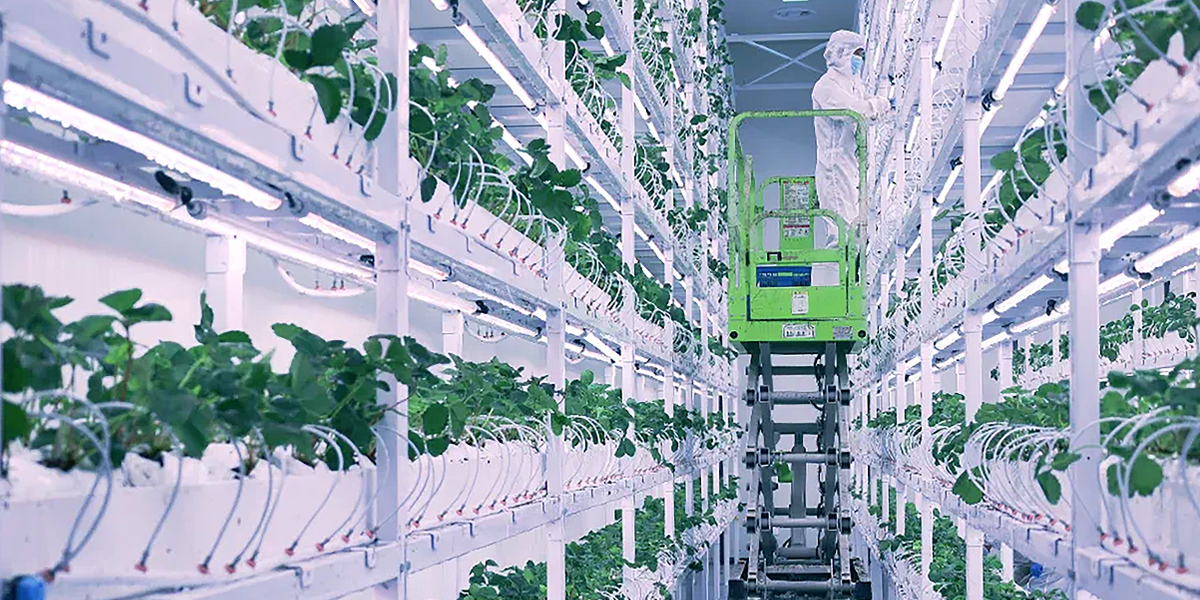
Indoor multi-tier vertical farming (plant factories) represents a high-end commercial strawberry cultivation model. Completely independent of natural light, it relies 100% on grow lights to provide the necessary illumination for growth. This places extremely high demands on lighting performance and serves as the primary application scenario for the Luxgrow LPVR series.
1. Completely breaks seasonal constraints, enabling continuous year-round production
The sealed environment is unaffected by rain, snow, smog, or extreme temperatures. Precise control over light, temperature, humidity, and CO₂ levels allows for off-season cultivation and staggered market entry, significantly boosting profitability. It is the optimal solution for standardized commercial mass production.
2. Multi-tier vertical farming doubles land-use efficiency
Vertical cultivation using multi-tier racking systems overcomes land area limitations. Yield per unit area far exceeds that of traditional greenhouses, making it ideal for the large-scale, intensive production of premium strawberries.
3. Precise, controllable spectrum and consistent, controllable quality
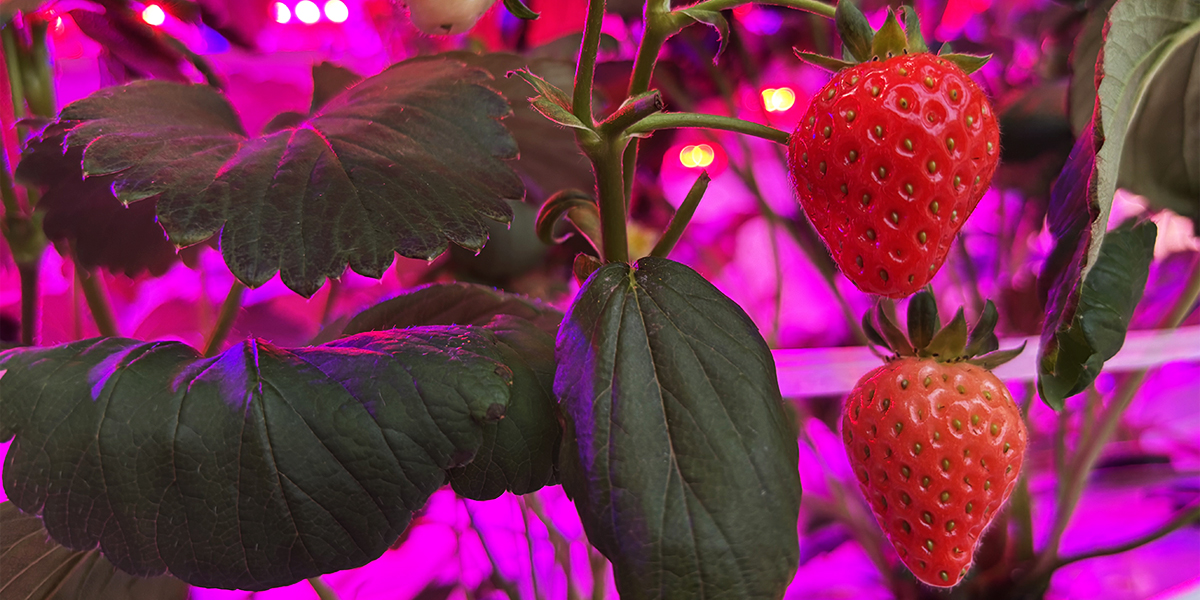
The spectral composition, light intensity, and photoperiod can be dynamically adjusted to match the strawberry's full growth cycle—including seedling propagation, vegetative growth, flowering, fruit expansion, and coloration. This allows for the precise mitigation of issues such as leggy growth, blossom drop, poor coloration, and insufficient sweetness, ensuring highly consistent fruit quality.
❌ Inherent drawbacks of indoor farming
High equipment investment and operating costs; requires supporting infrastructure such as HVAC, fresh air systems, CO₂ supplementation, and integrated fertigation systems. Continuous artificial lighting results in high energy consumption. The lack of natural pollination necessitates manual or mechanical assistance, placing extremely high demands on cultivation expertise and lighting equipment quality.
Standard grow lights fail to meet the precise requirements of multi-tier strawberry cultivation. In contrast, the Luxgrow LPVR series is specifically optimized for indoor commercial multi-layer rack systems, perfectly aligning with commercial standards for high-value strawberry cultivation and resolving the common pain points associated with traditional lighting.
The optical path is designed specifically for vertical rack structures, delivering highly uniform planar light distribution. This effectively eliminates issues common in multi-layer farming—such as uneven inter-layer lighting, weak light at the edges, and inconsistent plant development—ensuring uniform canopy lighting for every plant and consistent growth and appearance across the entire crop.
Equipped with a multifunctional spectral control system, it allows for seamless switching between specialized light recipes—such as those for robust seedling development, flower induction, fruit expansion and sweetening, and coloration enhancement. It covers the entire growth cycle from seedling to mature fruit. Compared to fixed-spectrum lights, it effectively improves flowering and fruit-set rates, increases sugar content, and reduces the incidence of deformed fruit.
By delivering consistent, high-intensity photosynthetically active radiation (PAR), this system compensates for the lack of natural indoor light and eliminates the impact of seasons and weather on cultivation. It effectively shortens the strawberry growth cycle and accelerates harvest turnover while increasing total plant biomass, ensuring high and stable yields.
The LPVR series is suitable not only for large-scale leafy green cultivation but is also perfectly adapted for high-value fruit crops like strawberries. It serves as a professional-grade lighting solution for indoor plant factories and multi-layer vertical farming, meeting the rigorous standards required for commercial mass production.
Final Selection: Greenhouse vs. Indoor—Which is more cost-effective?
Premium cultivation, multi-layer vertical farming, year-round mass production, and a focus on high-premium products → Indoor plant factory + Luxgrow LPVR series
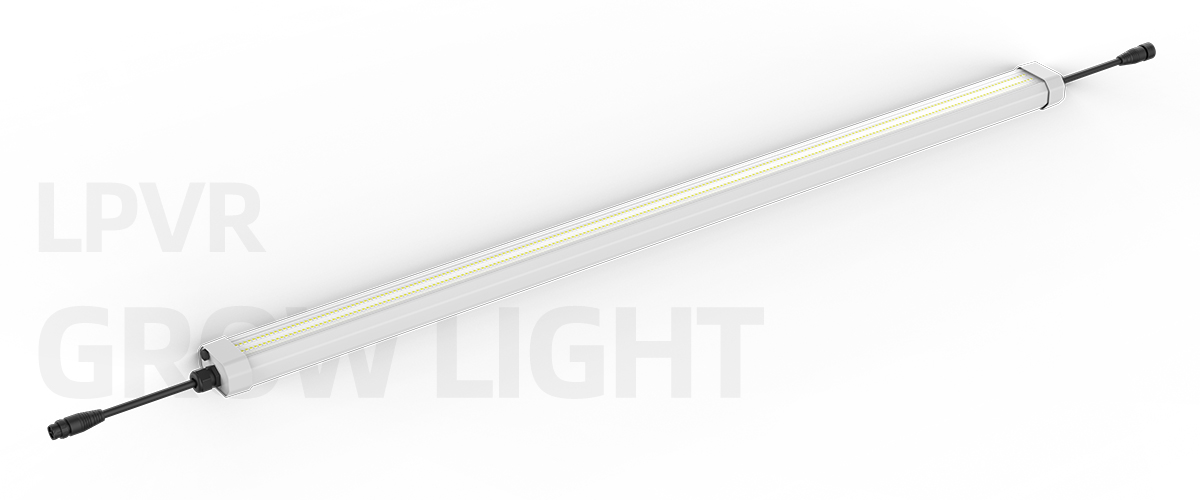
For growers seeking year-round, stable production of high-quality strawberries—free from seasonal constraints and achieving high-density, multi-layer yields with consistent fruit quality—the LPVR series is the optimal choice. With uniform illumination, precise spectral tuning, and stable, long-lasting output, it effectively resolves key challenges in indoor strawberry farming—such as leggy growth, low yields, and inconsistent quality—thereby enabling commercial growers to boost productivity and maximize revenue through premium pricing.
If the goal is low cost, superior flavor, and large-scale production, a greenhouse supplemental lighting model is the priority. However, for standardized, year-round, premium, high-value mass production, an indoor multi-layer plant factory paired with Luxgrow LPVR professional grow lights offers an irreplaceable commercial solution and represents the core trend for the future of intensive, high-end strawberry cultivation.
Luxgrow is developed by photology engineers and more than 13 years R & D engineers team in led lights
As a professional and rich experience grow light designer and manufacturer for indoor greenhouse farms ; Luxgrow really knows offer the exclusive customized layout service is very necessary and cost-efficient.
We offer free exclusive customized layout service for customers , not only in the lighting configuration help,but also help you know the budget
 Whatsapp
 Company Profile
 Made in cambodia
 Development
 Research and development
 Production capacity
 Plants Grow Lights
 Agriculture Supplemental Lights
 Medical cannabis cultivation
 Agricultural planting