

Will led lights grow plants? This is one of the mostsearched questions for indoor gardeners, vertical farm operators and hobby growers. Not all LED lights are equal. Ordinary household LED lamps are tuned for human vision, while full spectrum grow led light products are engineered around plant photobiology. To pick the most efficient led grow lights, you must understand spectrum data, how to read spectral graphs, and clear up widespread misconceptions such as the “blue-light demonization” myth.
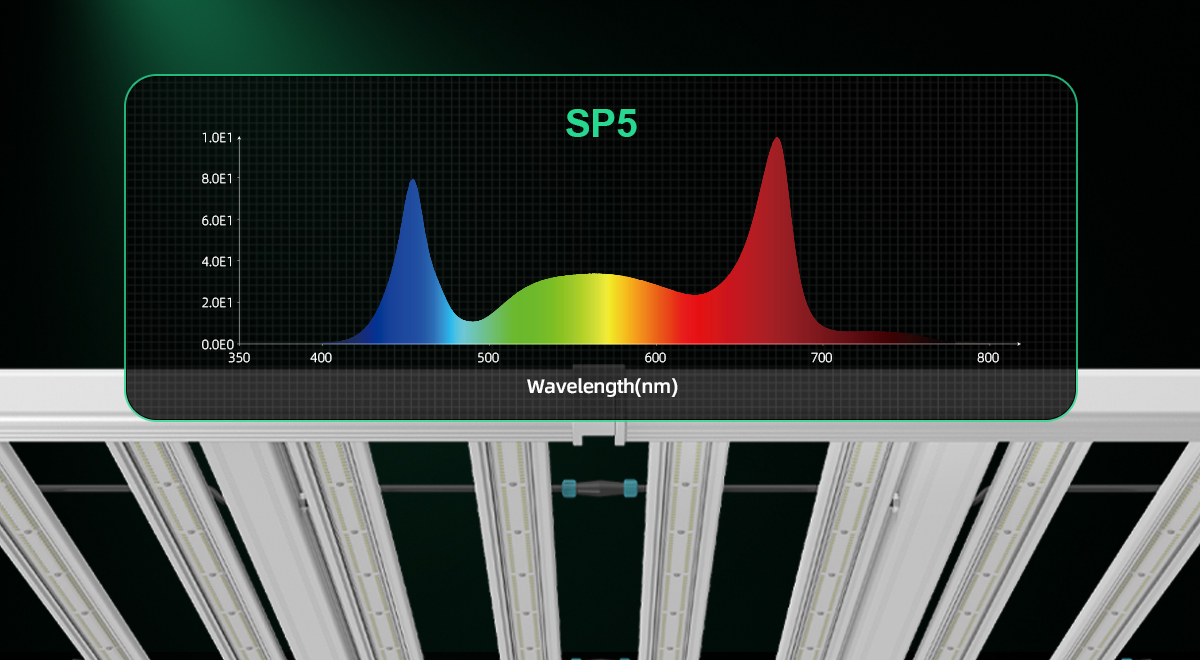
Light is electromagnetic radiation. Frequency and wavelength are inversely correlated: shorter wavelength equals higher frequency. All visible colours are defined by fixed nanometer(nm) bands, which decide how plants respond physiologically.
Red:625-740 nm: Major photosynthesis driver, boost flowering, fruiting and biomass accumulation
Orange:590-610 nm: Assist photosynthesis, improve light penetration
Yellow:570-585 nm: Minor contribution to plant metabolism
Green:492-577 nm: Penetrates dense canopy, activates lower-leaf photosynthesis
Indigo:420-440 nm: Supports secondary metabolite production
Blue:440-475 nm: Reinforce stems, control stomata opening, prevent plant stretching
Violet:380-420 nm: Trigger stress response, increase anthocyanin and flavonoid content
Most natural sunlight and quality grow lamps are composite polychromatic light, mixing multiple wavelength bands together. Monochromatic singlecolour lighting rarely meets fullcycle cultivation requirements.
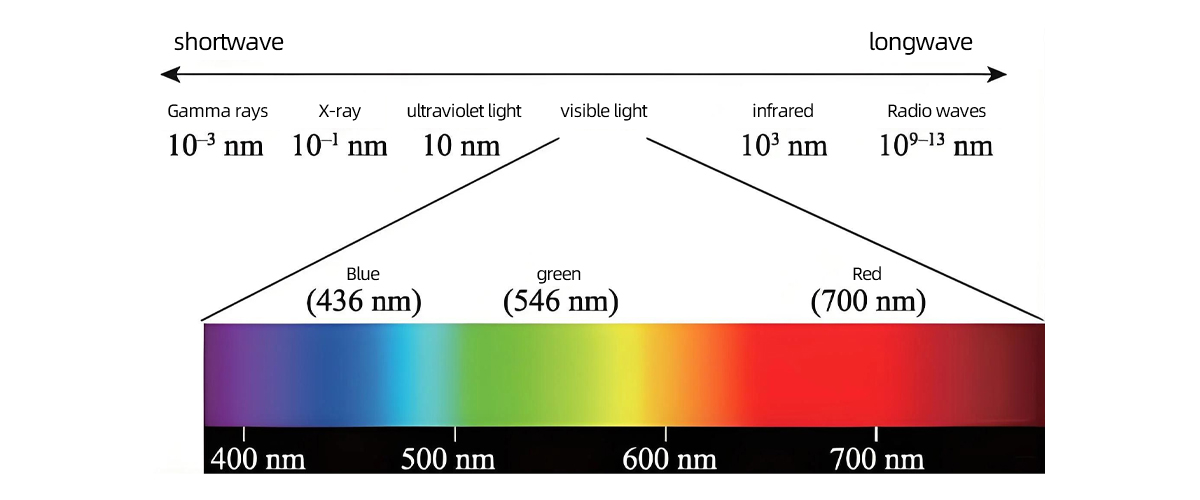
A spectrum graph is a 2-dimensional measurement result captured by a spectrometer, the core tool for evaluating grow-light performance.
l X-axis (Horizontal): Wavelength measured in nanometers(nm), covering UV-visible-near-infrared range.
l Y-axis (Vertical): Relative light intensity / photon flux at each wavelength point.
By reading this curve, growers can directly observe which wavebands are strong or weak, check spectral continuity, and identify missing critical peaks. Reliable manufacturers such as Luxgrow provide original spectral test data for its full spectrum grow led light series instead of only marketing claims.
Key note: Smooth continuous spectrum curves are preferred; sharp gaps mean certain useful photons are missing and may limit plant performance across growth stages.
A popular misunderstanding circulates: “the lower the blue output, the better an LED fixture is”. This idea is partially misinterpreted from the 2019 ANSES report (French Agency for Food, Environmental and Occupational Health & Safety) about LED lighting and blue-light hazards.
1. Risk comes from acute high-intensity, close-range, long-duration exposure. Short-wave blue (415-450 mm) may cause photochemical oxidative stress to retinal RPE cells under extreme humaneye exposure scenarios. Children and teenagers have more transparent lenses and are more sensitive. Night-time excessive short-wave blue can suppress melatonin secretion.
2. Natural sunlight contains abundant blue light. Moderate blue improves visual sharpness and alertness for humans.
3. For plants, blue light is biologically essential: it controls stomatal behaviour, suppresses excessive internode elongation, promotes chlorophyll synthesis and raises secondary metabolite levels. Removing blue light entirely will result in lanky, weak seedlings with poor stress resistancePMC.
For practical lighting design including Luxgrow most efficient led grow lights: instead of minimising all blue output, engineers optimise to suppress harmful 415-450 nm short-wave blue peaks while keeping adequate 440-475 nm blue photons required for plant morphology. Balanced blue proportion protects human operators while supporting healthy crop development.
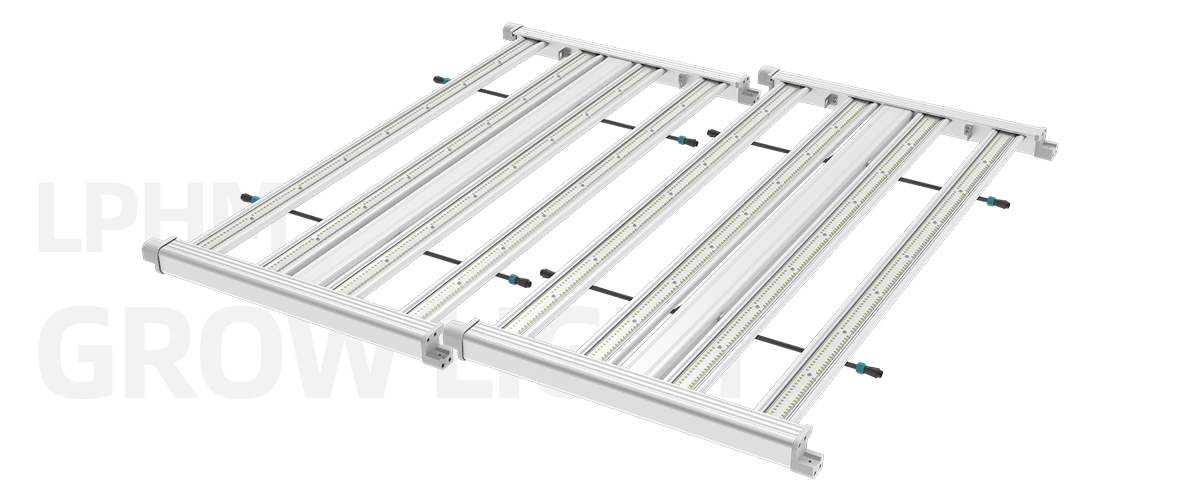
Will led lights grow plants successfully? Yes — but only when the spectrum is properly configured.
Traditional early grow-lights only mixed red and blue diodes, creating purple-pink glow, lacking green, orange and supplementary violet bands. Modern full-spectra solutions represented by Luxgrow replicate sunlight’s continuous distribution across PAR 400-700 nm plus selected UV-violet and far-red components.
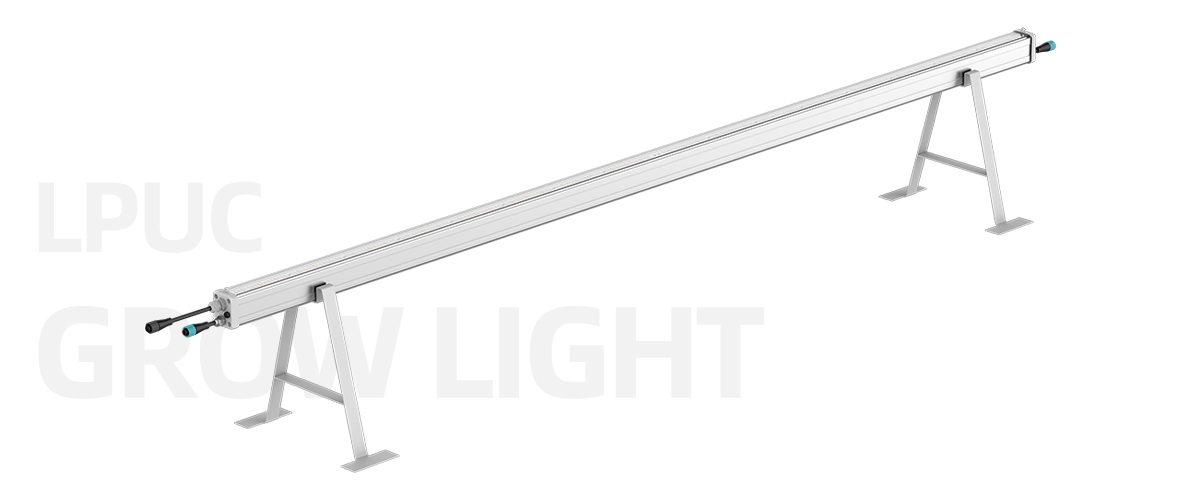
Core benefits:
1.Whole-cycle compatibility: One lamp works for seedling, vegetative and bloom phases without hardware replacement.
2.Canopy utilisation: Green light passes through upper foliage to energise shaded lower-layer leaves.
3.Better crop quality: Balanced spectrum boosts flavour compounds, anthocyanin and nutritional value.
4.Human-friendly working environment: More natural white appearance compared to harsh purple old-style lamps.
Choosing the most efficient led grow lights should not only look at wattage; always review spectral reports, PPE(photon-photonic efficacy) and PPFD uniformity together with spectrum continuity.
FAQ
Q1: Will led lights grow plants as well as sunlight?
A: Yes. High-quality full-spectra LED grow lights such as Luxgrow can supply required PAR photons. While sunlight changes with weather and seasons, LED systems deliver stable, adjustable light for year-round indoor farming.
Q2: Is less blue light always better for grow lights?
A: No. Total blue cannot be arbitrarily cut down. Plants need blue light for compact growth and stomatal regulation. Optimisation targets excessive short-wave blue (415-450 nm), not all blue spectrum.
Q3: What should I check on a spectral graph before buying grow lights?
A: Confirm full coverage of 400-700 nm PAR range, check for extreme spectral gaps, verify red-blue peak positions, and review blue-band distribution. Trust brands that publish real spectrometer test data, not only descriptive marketing text.
Q4: What makes the most efficient led grow lights?
A: High photon efficacy (μmol/J), well-balanced fullspectrum grow led light curve, uniform PPFD output, reliable thermal management, and real measured spectral documentation. Pure high wattage does not guarantee high efficiency.
Conclusion
Understanding grow-light spectrum is foundational for indoor growing success. Wavelength bands each carry unique plant functions, and spectral graphs offer objective performance evidence. The blue-light demonization myth reminds us to distinguish humaneye safety risks from plant physiological needs.
If you wonder will led lights grow plants for your crops, select wellengineered full spectrum grow led light. Luxgrow optimises spectral continuity and safe blueband distribution, delivering the most efficient led grow lights for home garden, greenhouse and vertical farm projects.
Luxgrow is developed by photology engineers and more than 13 years R & D engineers team in led lights
As a professional and rich experience grow light designer and manufacturer for indoor greenhouse farms ; Luxgrow really knows offer the exclusive customized layout service is very necessary and cost-efficient.
We offer free exclusive customized layout service for customers , not only in the lighting configuration help,but also help you know the budget
 Whatsapp
 Company Profile
 Made in cambodia
 Development
 Research and development
 Production capacity
 Plants Grow Lights
 Agriculture Supplemental Lights
 Medical cannabis cultivation
 Agricultural planting