

Reducing electricity costs is one of the core needs of cannabis growers, and LED and HPS (high pressure sodium lamps) are the two mainstream lighting technologies. The following is a detailed energy efficiency comparison and optimization strategy to help growers choose the most suitable solution:
Energy Efficiency:
LED: Generally has higher efficacy (light output/power consumption), up to 100-200 lumens/watt.
HPS: Relatively lower efficacy, about 70-150 lumens/watt.
Lifespan:
LED: Long lifespan, typically up to 25,000 to 50,000 hours.
HPS: Shorter lifespan, about 12,000 hours.
Heat Generation:
LED: Generates less heat, reducing energy consumption for air conditioning and ventilation.
HPS: Generates a lot of heat, which may lead to additional cooling needs.
Initial Investment:
LED: Higher initial investment, but saves electricity bills in the long run.
HPS: Lower initial investment, but higher long-term operating costs.
Environmental Impact
LED: More environmentally friendly, contains fewer hazardous substances.
HPS: Contains mercury, which is potentially harmful to the environment.
█ Prioritize LEDs with a light efficiency of ≥3.0 μmol/J (such as Osram, Cree, Bridgelux and other brands).
█ Avoid low-priced and low-quality LEDs, whose actual light efficiency may be lower than 2.0 μmol/J, which consumes more electricity.
PPFD (photosynthetic photon flux density) matches crop needs:
█ Leafy vegetables: 200~400 μmol/m²/s
█ Tomatoes/cucumbers: 600~800 μmol/m²/s
█ Cannabis/high-value-added crops: 800~1200 μmol/m²/s
█ Light that exceeds demand = waste of electricity!
Optimize photoperiod:
█ Some crops can use intermittent supplementary lighting (such as on for 10 minutes and off for 5 minutes) to reduce total energy consumption.
█ Use a combination of natural light + supplementary lighting (such as supplementary lighting on cloudy days and reduced lighting on sunny days).
█ Light sensor + automation: adjust the supplementary light intensity according to the real-time light (such as Photon and other systems).
█ Regional control: manage crops in different growth stages in different areas to avoid uniform supplementary light waste.
█ HPS lamps generate high heat and require additional air conditioning for cooling (increasing electricity bills).
█ LEDs generate low heat and can reduce greenhouse cooling costs (especially suitable for closed vertical farms).
█ Supplementary lighting during low electricity price periods at night (such as 22:00~6:00) to reduce electricity expenses.
█ Check local agricultural energy-saving subsidies (such as the EU and some provinces in China have subsidies for LEDs).
█ Use solar energy + energy storage systems for power supply to further reduce long-term electricity costs.
Choose HPS: limited budget, short-term planting, high heat demand (such as cold regions).
Choose LED: long-term operation, high value-added crops, refined spectrum control, vertical farms.
Summary
The most energy-saving solution = high-efficiency LED + intelligent control + peak and valley electricity prices + government subsidies
Difficult to transform in the short term? HPS can be gradually replaced, or LED+HPS mixed lighting can be used.
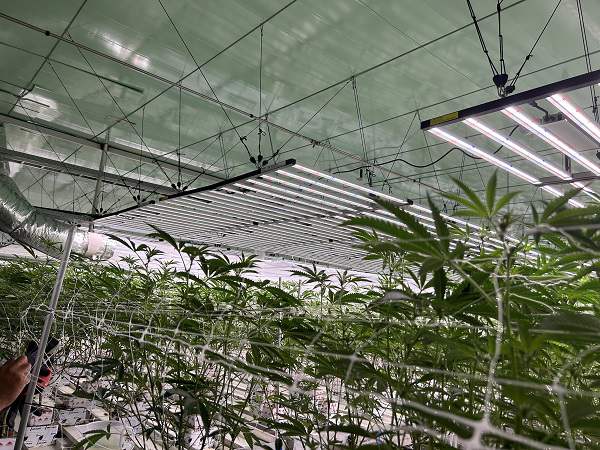
If you need a lighting solution or lighting recommendation for specific crops (such as lettuce and marijuana), you can discuss it further with luxgrow!
Luxgrow is developed by photology engineers and more than 13 years R & D engineers team in led lights
As a professional and rich experience grow light designer and manufacturer for indoor greenhouse farms ; Luxgrow really knows offer the exclusive customized layout service is very necessary and cost-efficient.
We offer free exclusive customized layout service for customers , not only in the lighting configuration help,but also help you know the budget
 Whatsapp
 Company Profile
 Made in cambodia
 Development
 Research and development
 Production capacity
 Plants Grow Lights
 Agriculture Supplemental Lights
 Medical cannabis cultivation
 Agricultural planting